Pole weapons

Pole weapons

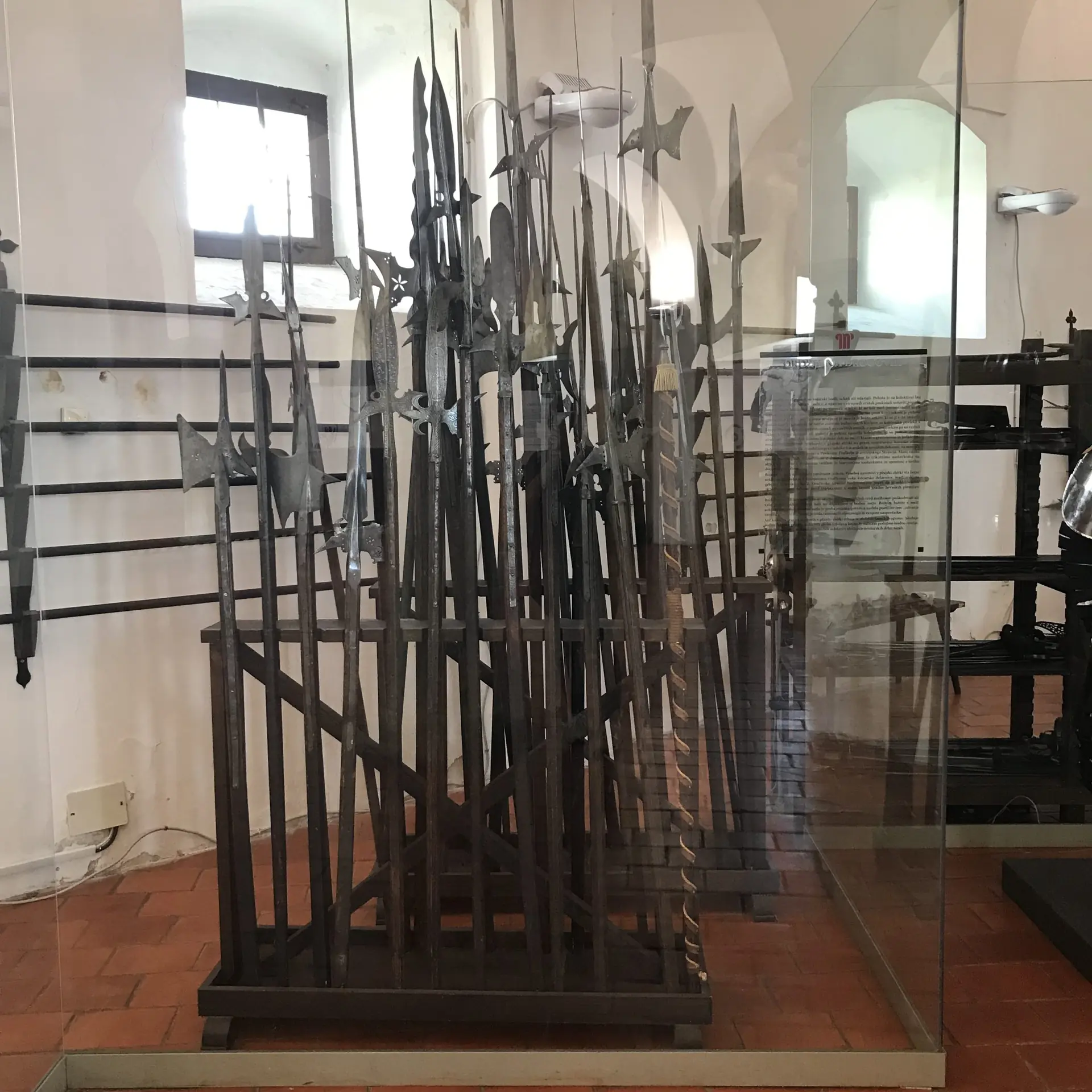
On the left side of the armoury, pole weapons are displayed: spears and lances, halberds, corseques, partisans, spontoons, battle axes, and maces.The pole increased the power of a soldiers swing and stab. Lances were mainly used by cavalrymen, while spears were used by the infantry when trying to stop a cavalry charge. These weapons also … Read more
Cannons

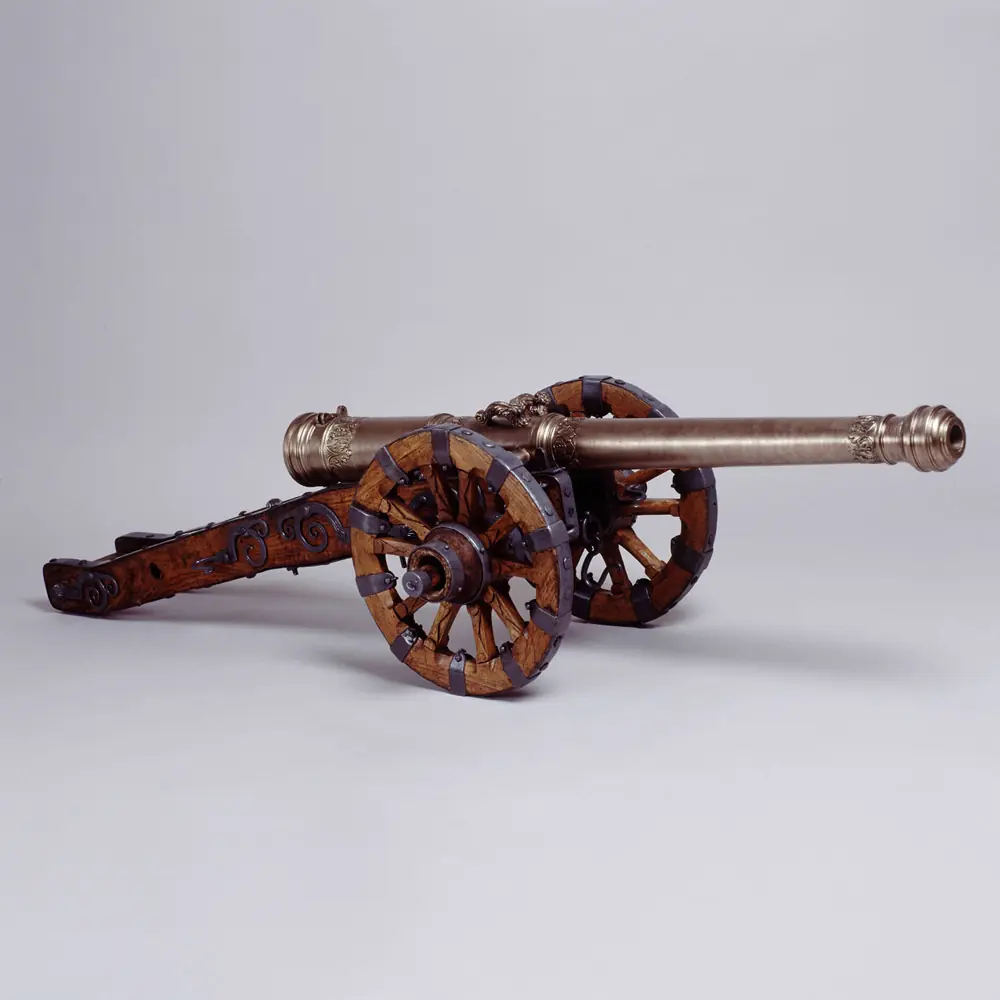
The cannons from the Ptuj collection are among the oldest preserved artillery weapons in Slovenia: the oldest is a wrought-iron light bombard, a typical representative of field artillery from the mid-15th century. The forge-welded iron field cannon is a generation younger, dating from the end of the 15th century. Both of these late medieval cannons … Read more

Hook guns or arquebuses

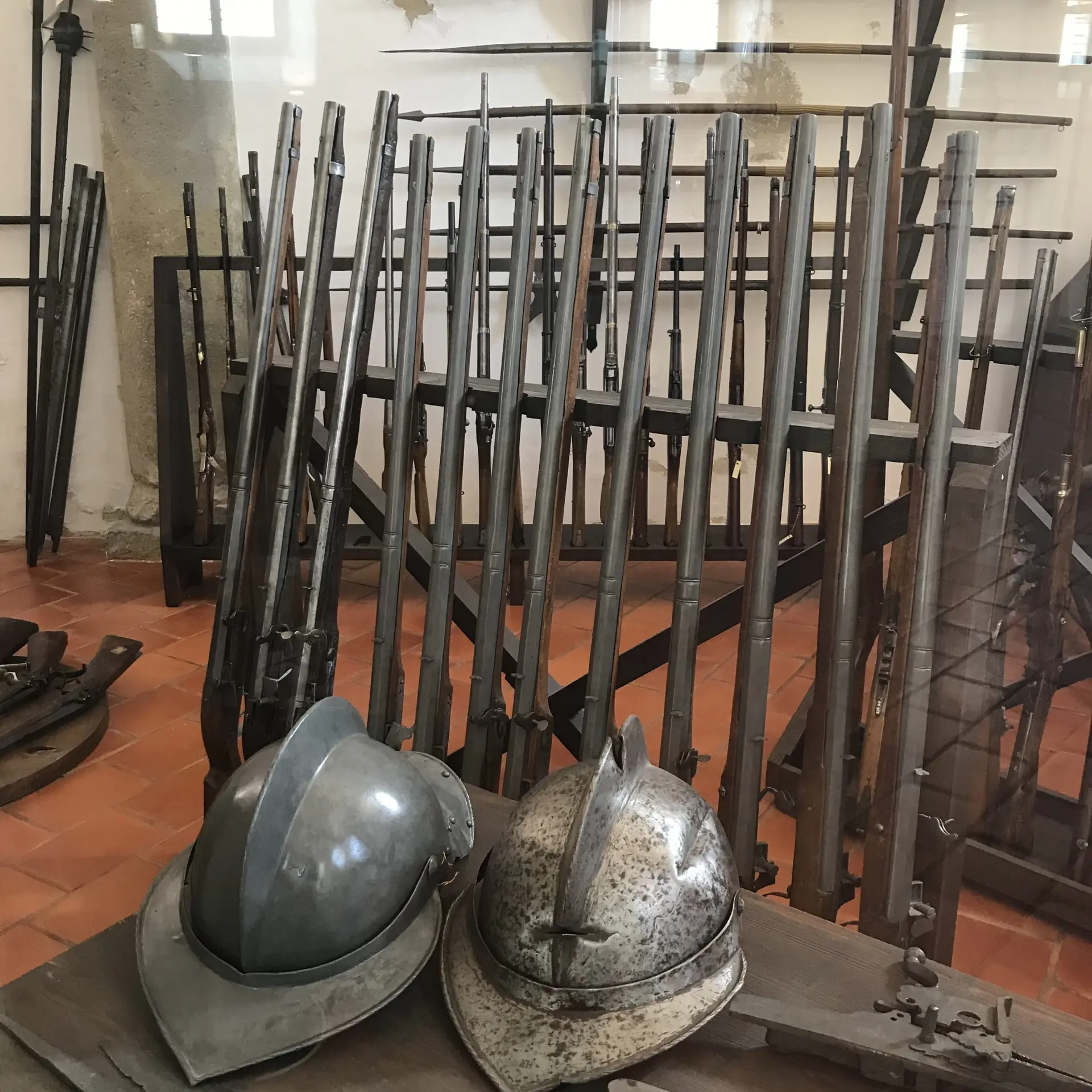
Hook guns, or arquebuses, are named after the hook on the underside of the barrel, which was hooked to a wall to prevent the strong recoil from injuring the shooter. The weapons on display were made at the end of the 16th century. Only the barrels are preserved, without the mechanism and the stock. 

Provincial mercenaries’ armours

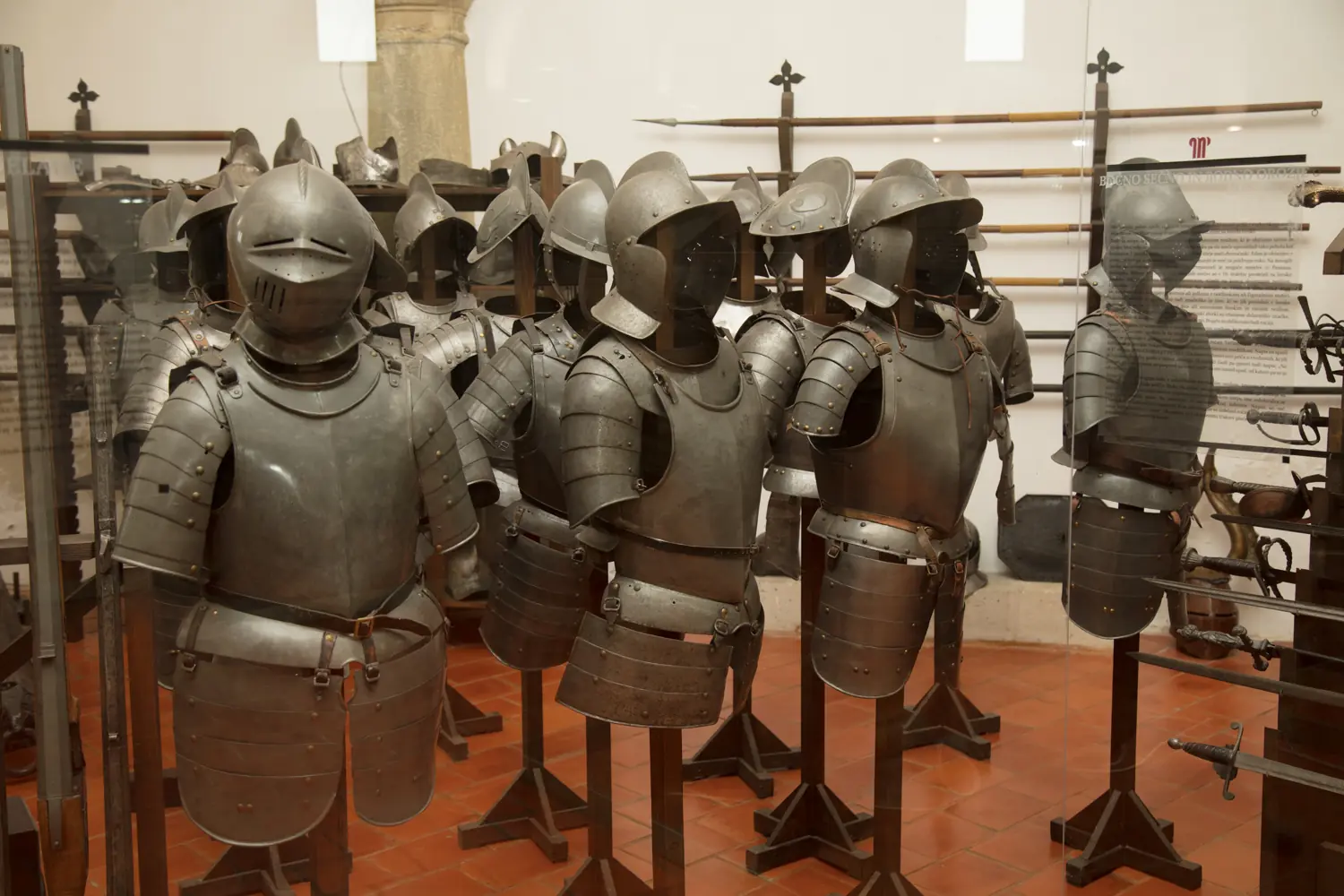
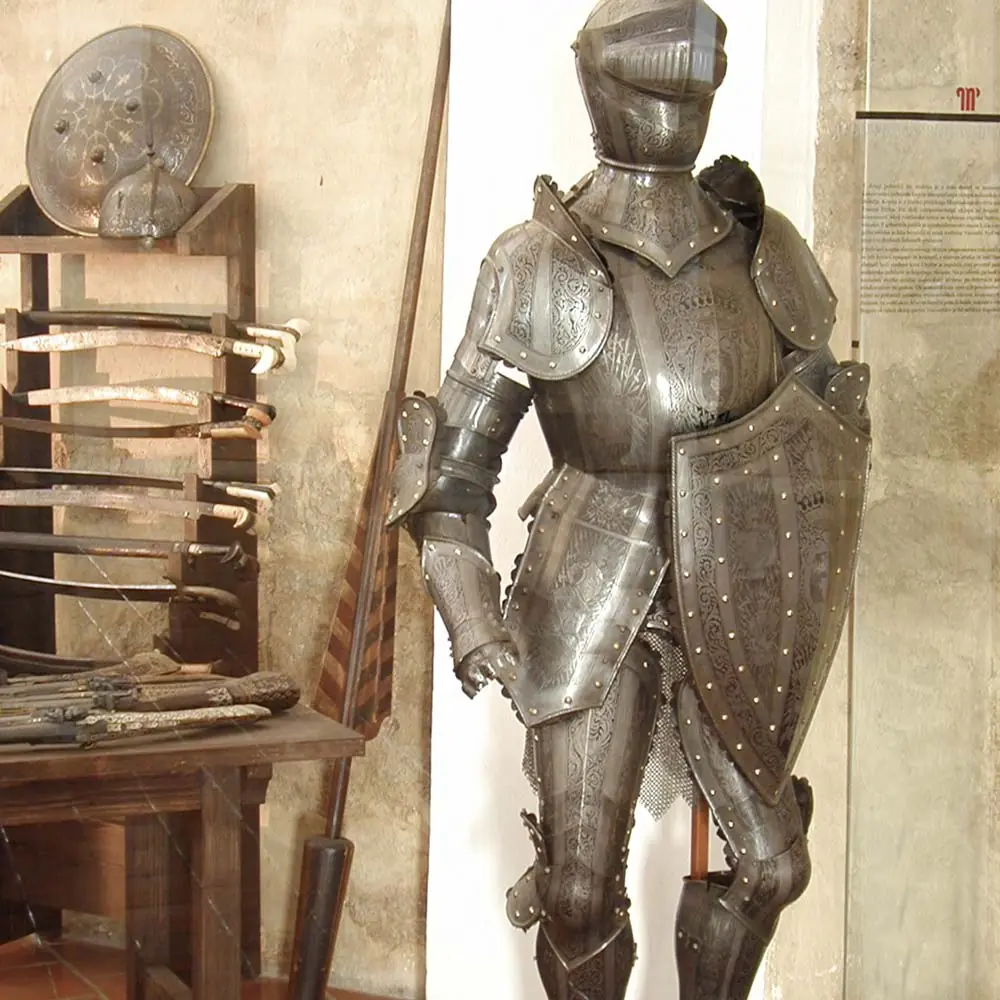
The provincial mercenaries’ armours were used by foot soldiers and cavalrymen in the 16th and 17th centuries in defence against the Turks. They protected the soldiers from blows and shots from the enemy.Their use was accelerated by the increasing penetrating power of projectiles. In the second half of the 16th century, the Styrian Estates ordered … Read more

Bladed weapons

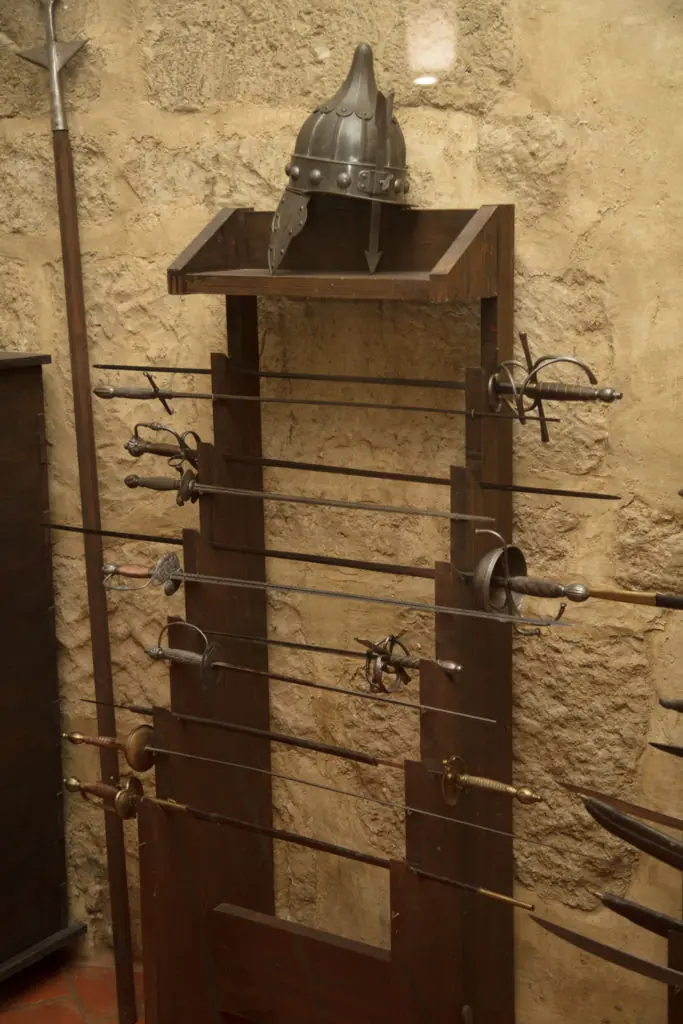
The bladed weapons on display include swords, sabres, pallasch swords, rapiers, and yatagans.For centuries, swords were the principal weapons of warriors; they were used by both infantry and cavalry. Swords have a straight, double-edged blade. The two-handed sword displayed on the table is from the 16th century.Sabres have a curved single-edged blade. They came to … Read more

Muskets

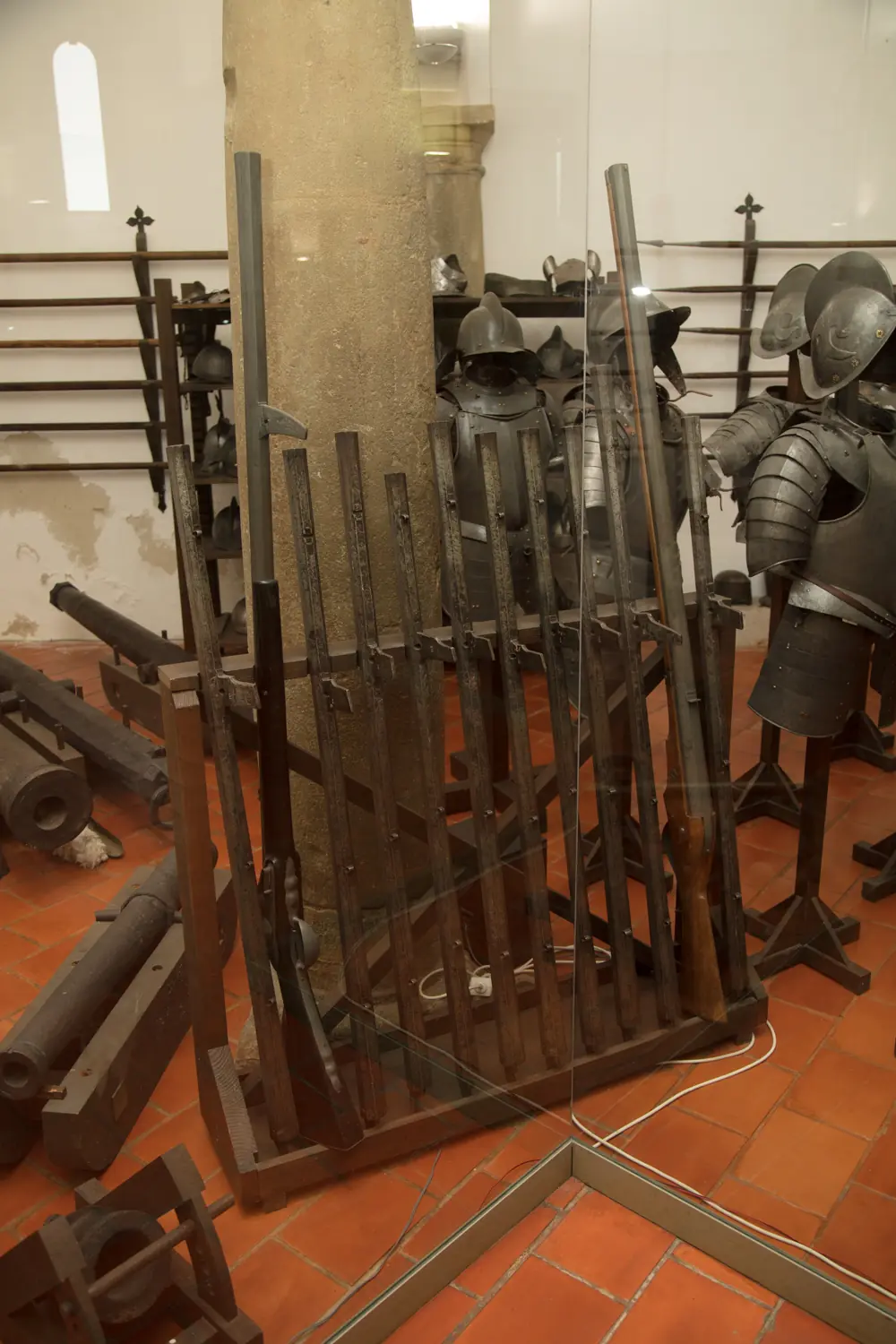
The muskets from the 17th century have a fuse cord ignition mechanism. They had to be propped against a support when firing. According to Herberstein family lore, they were used in the Battle of Saint Gotthard with the Turks in 1664.

Flintlocks

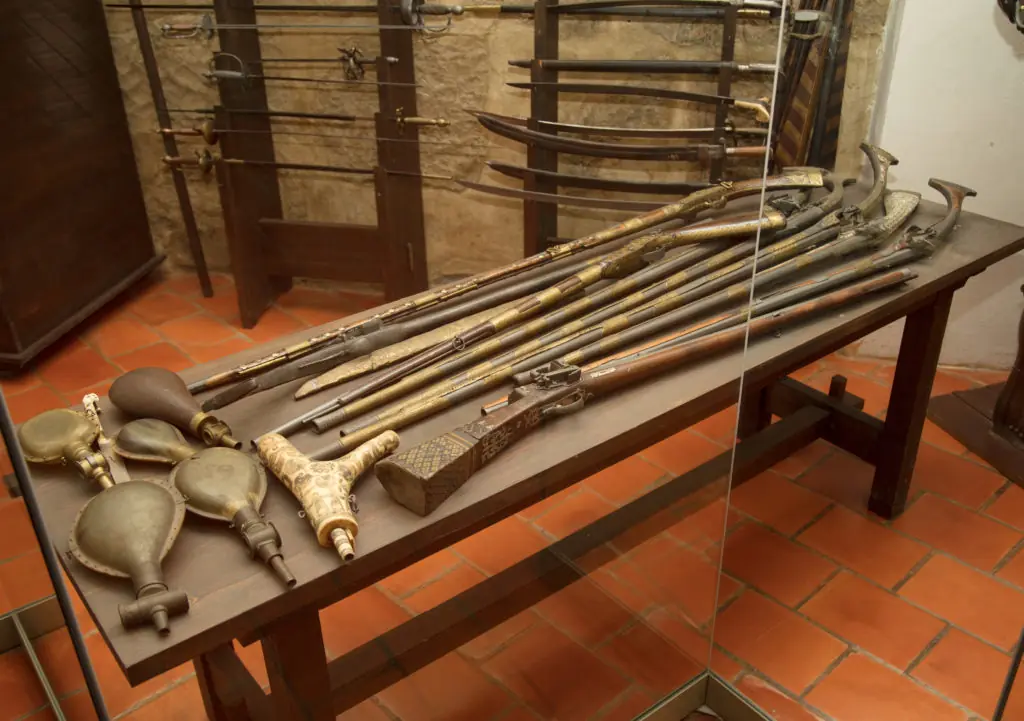
The flintlocks originate in the Balkans and are inspired by oriental designs. They have a flint ignition mechanism.

Replica of the ceremonial armour

This high-quality replica of the ceremonial armour of the Visconti dukes of Milan, based on an original from six centuries ago, captures the romantic spirit of the 19th century, when bloody conflicts and cruelties were forgotten and weapons were admired for their craftsmanship and ornamentation. Collections intended for viewing started being put together in castles. … Read more