THE COLLECTION OF FEUDAL DWELLING CULTURE

THE COLLECTION OF FEUDAL DWELLING CULTURE
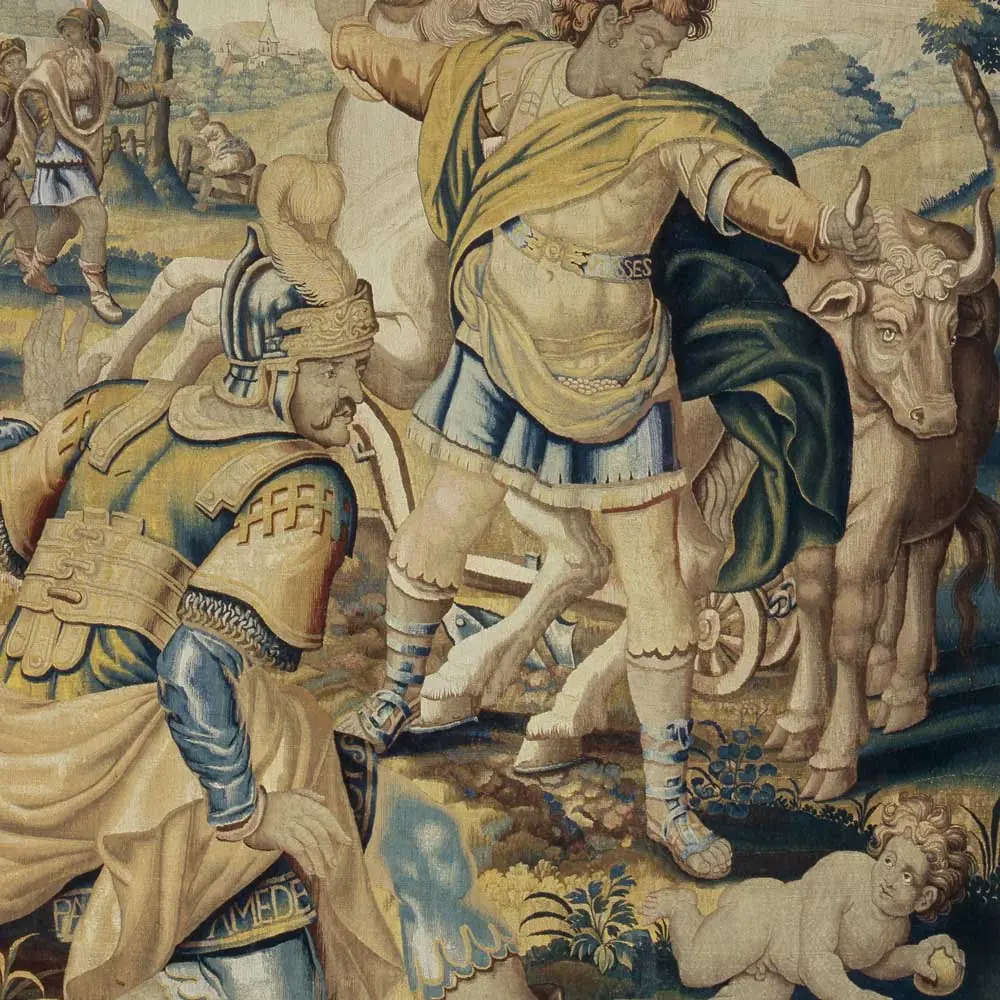
The first floor of Ptuj Castle houses a collection of feudal dwelling culture with furnishings dating from the 16th to the 20th century. The furniture and artworks, which mostly come from the estate of the Counts of Herberstein, create a historic ambience in the rooms. Some of the furnishings come from the nearby castles of … Read more
The dining room

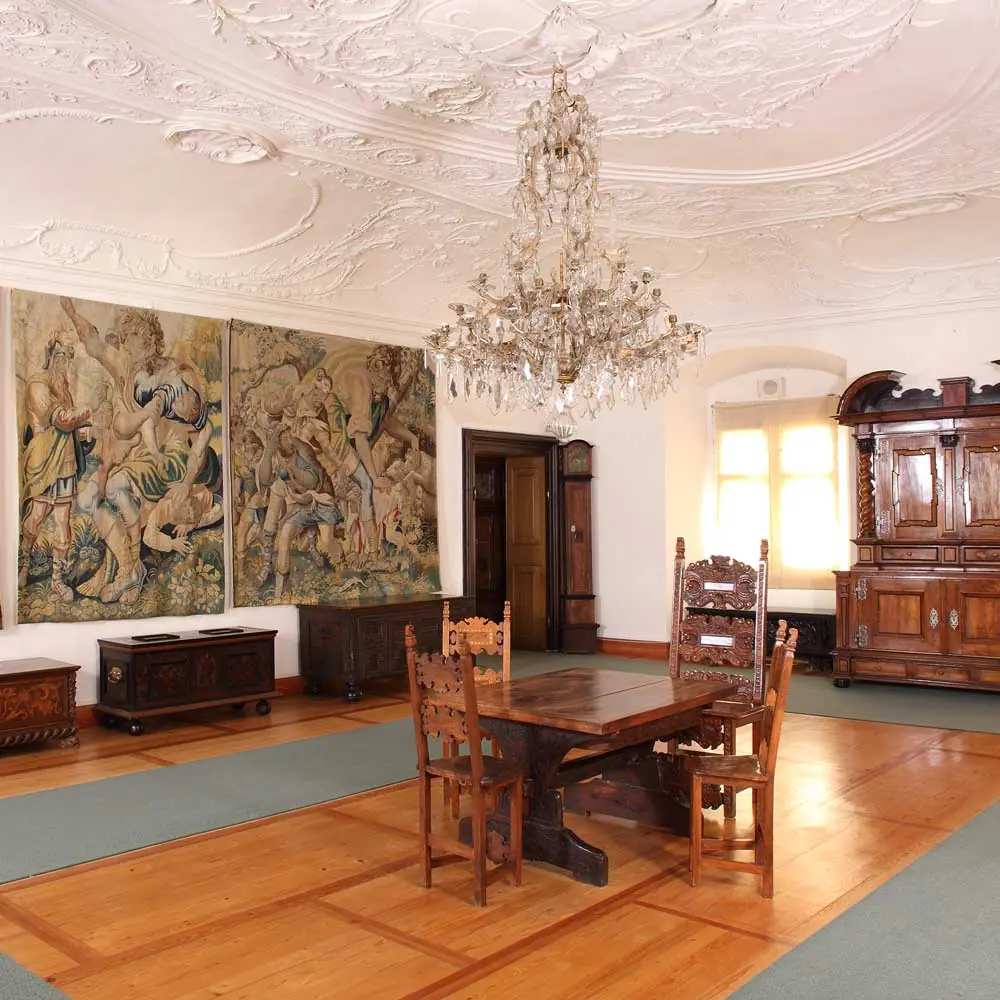
The castle dining room was once an entertaining space for the castle owners and their guests. The ceiling is decorated with 18th-century stucco with the arms of alliance of the Counts of Leslie and the House of Liechtenstein.The oldest furniture in the castle includes a late Gothic corner washstand from the second half of the … Read more

Chamber

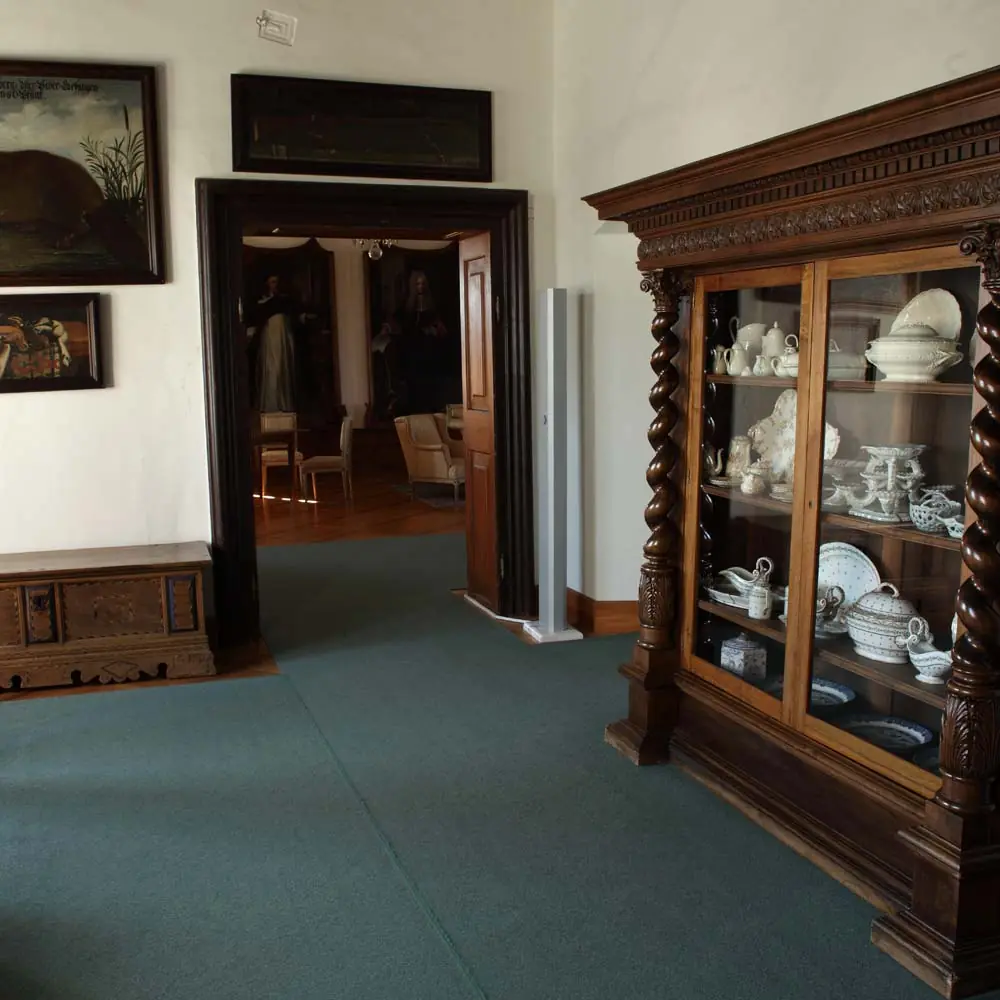
A smaller room with a 17th-century larch-beamed ceiling displays goblets and vessels made of glass, pewter, silver, copper, white-ware ceramics, faience, and porcelain.Especially eye-catching is an hourglass made of four glass bowls with white and red sand, which runs through a narrow throat for 15, 30, 45 and 60 minutes.The cabinet by the window holds … Read more

The Herberstein Gallery

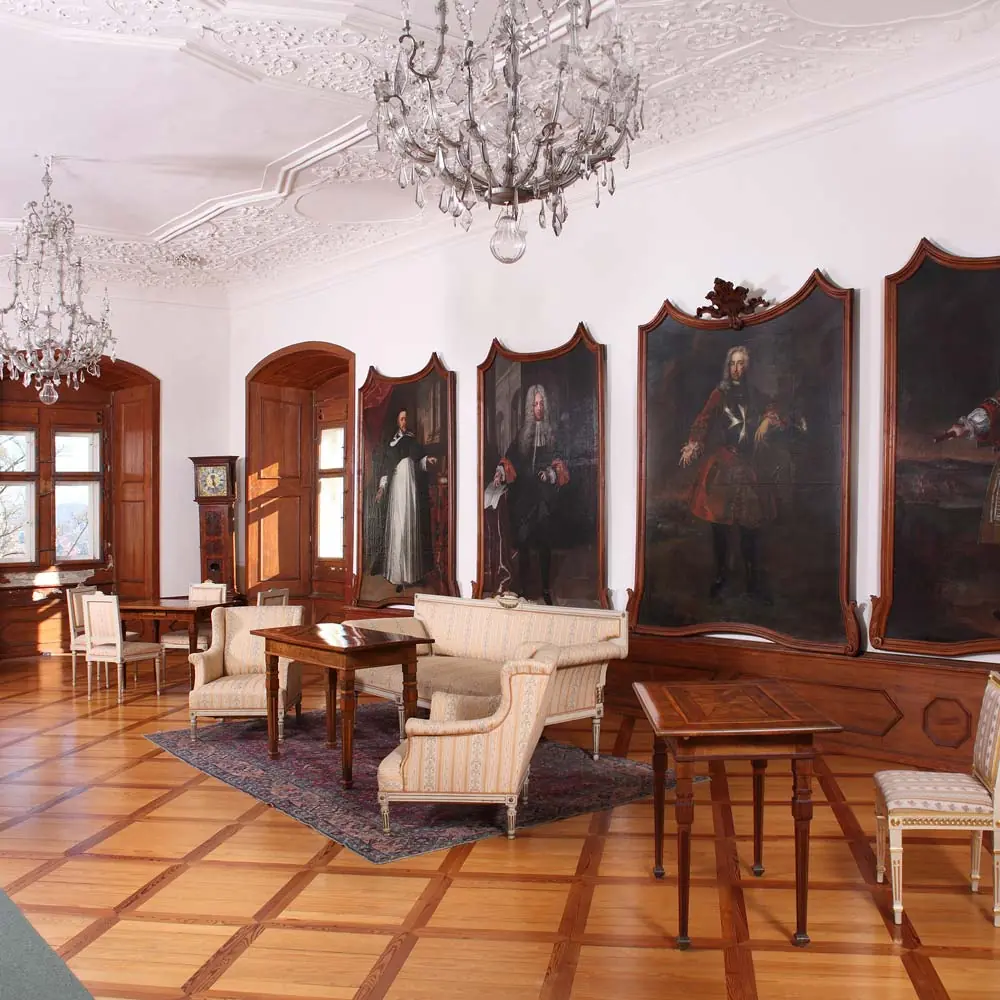
In the 19th century, this room, used for social gatherings, was called the balcony room, as it had access to a large balcony. The Louis XVI-style sofa set comes from Ormož Castle. The classical gaming table is fitted with a chess or checkers board and a mills board.The full-length portraits from Hrastovec Castle depict important … Read more

The Count’s Study

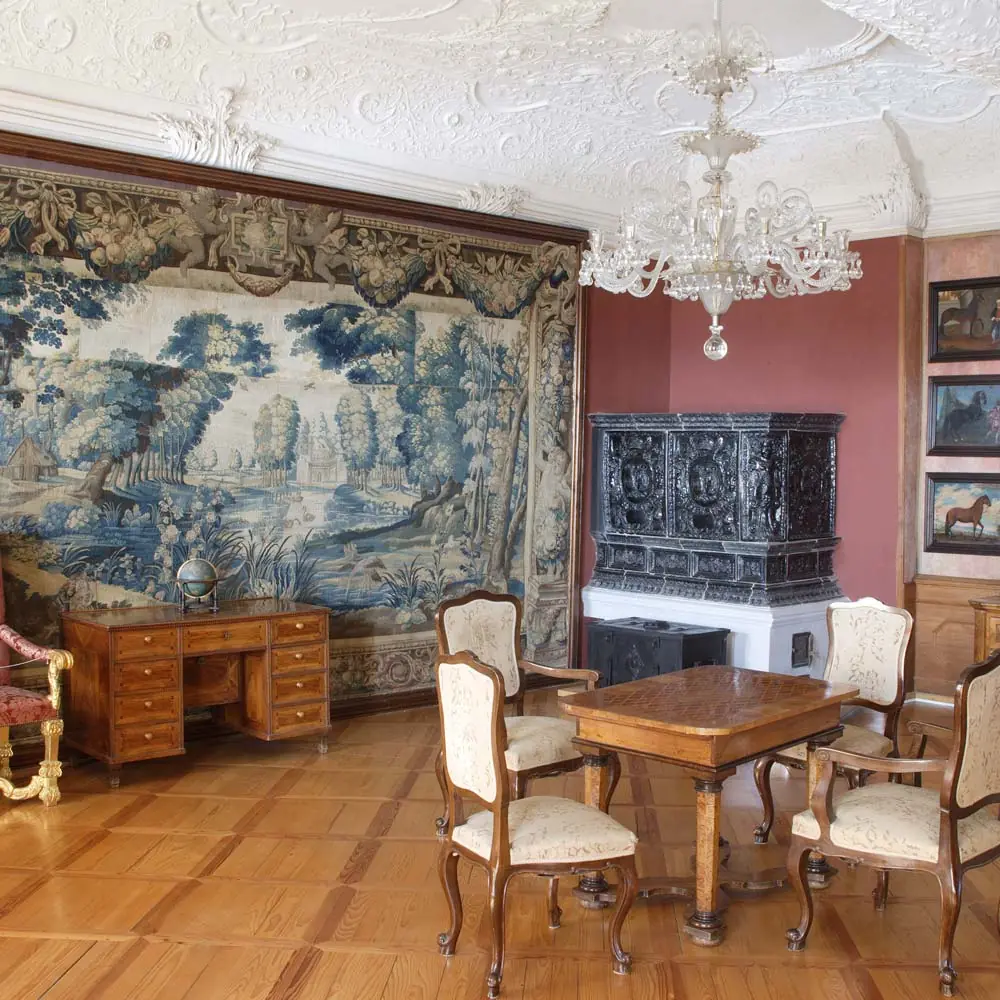
The ceiling is adorned with stucco, which adapts to the shape of the older beamed ceiling.The books in the cabinet are from the Herberstein estate. The 17th-century portraits of horses come from Vurberk Castle and show the Baroque fashion for portraying these noble and prized animals.This room also houses a carved and gilded mirror frame … Read more

Insignia of the Ptuj town judge

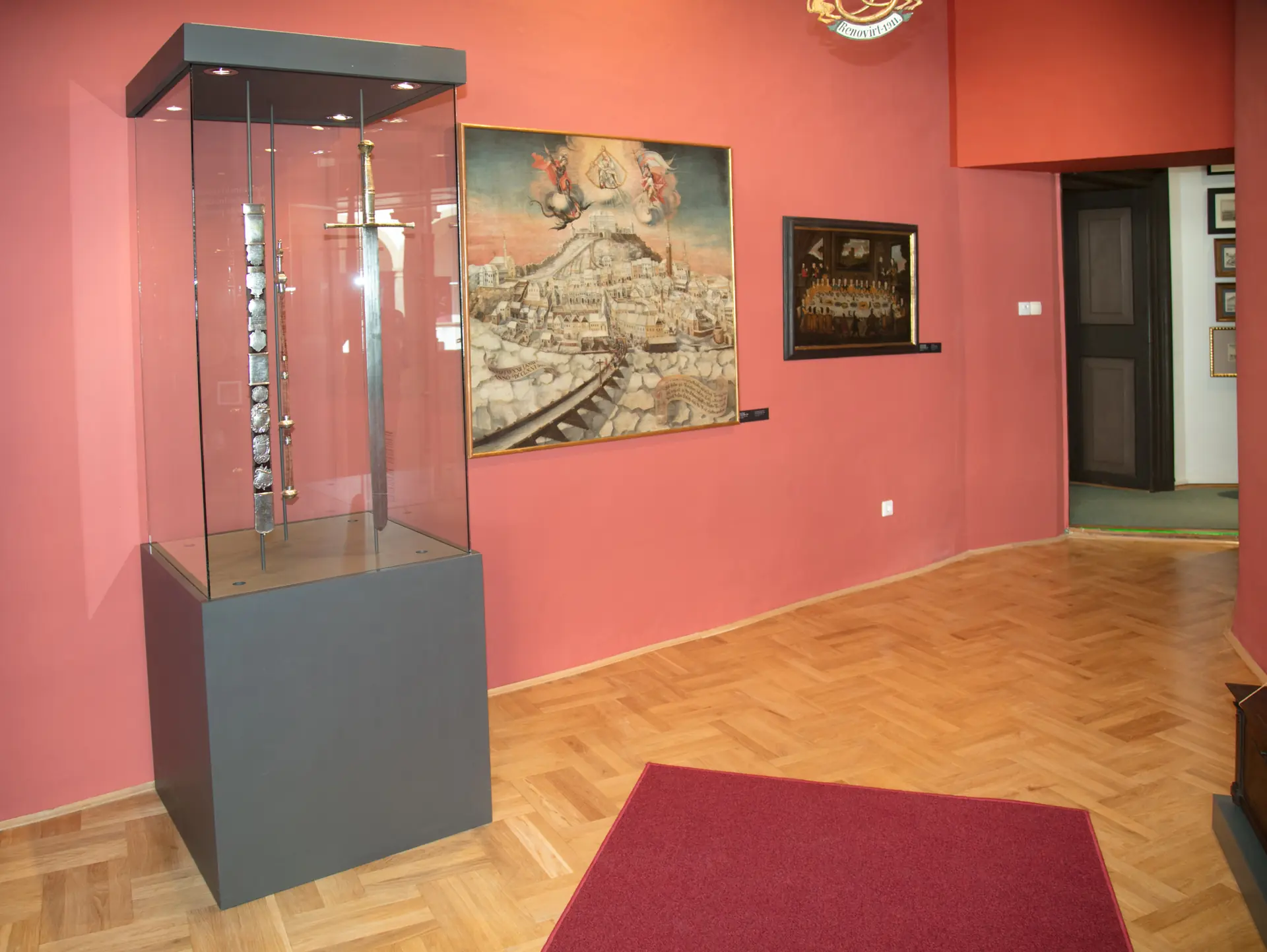
The wonderfully preserved sword, scabbard, and staff of the Ptuj town judge are exceptional objects documenting the judicial authority in the city. They were in use from 1555 until 1787, when Emperor Joseph II dissolved the magistrate’s court and the town was given a mayor.The judge’s sword is a hand-and-a-half sword and was not used … Read more

Connecting corridor

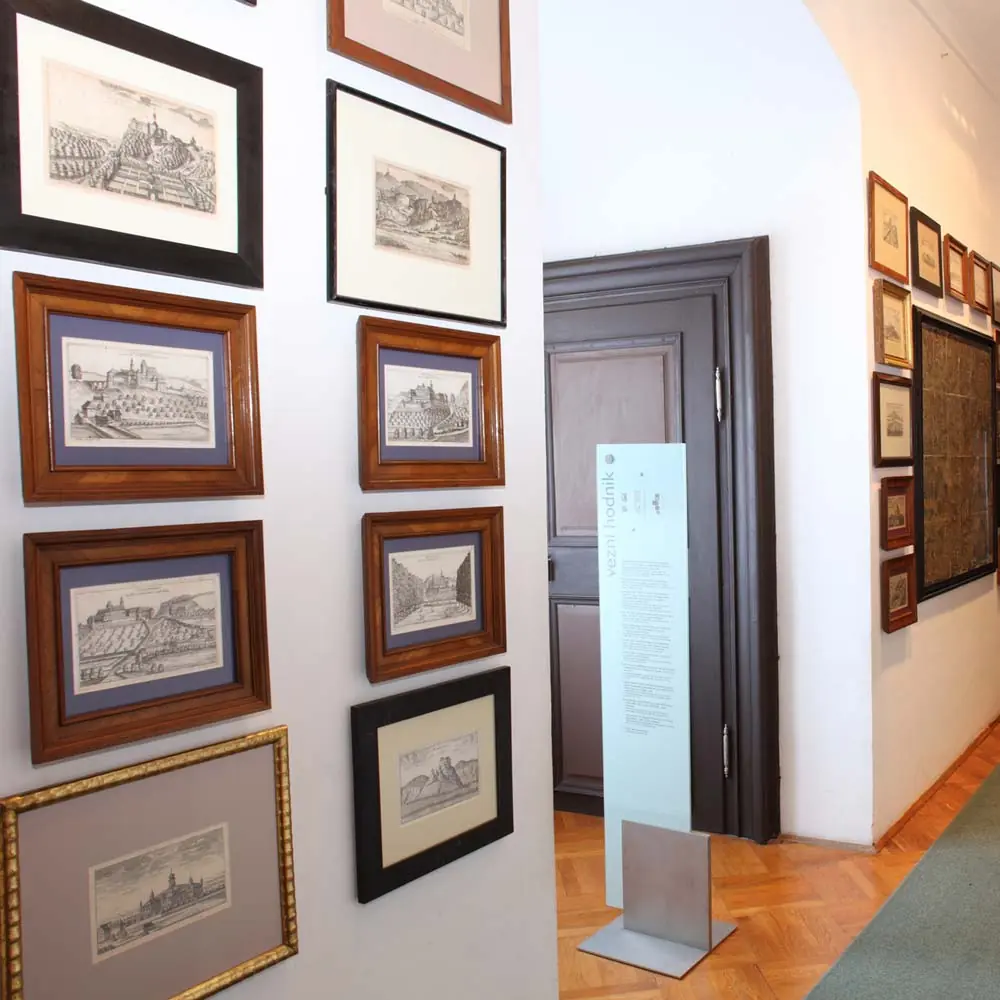
The corridor connects the more recent Baroque rooms with the older Gothic ones. Two embrasures are preserved in the wall; they were used by defenders of the castle.Between them is the genealogy of the Counts of Herberstein, consisting of nine copper engravings, starting at the bottom with the founder of the family, Otto, from whom … Read more

The Countess’ salon

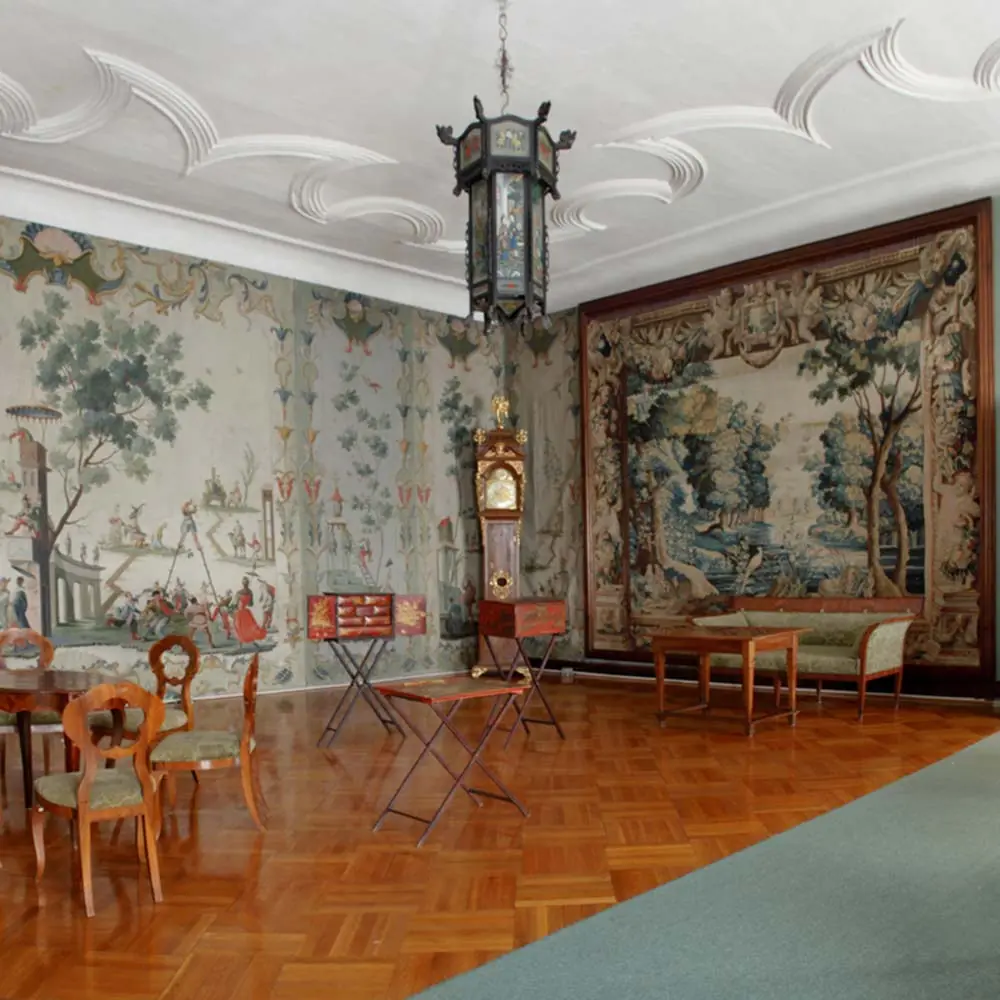
The walls of the room used for family gatherings are now decorated with 18th-century wall coverings with Chinese motifs, which was transferred from the Dornava Mansion after the Second World War. In keeping with this theme, the room is furnished with small pieces of furniture with oriental motifs: a red and black lacquered cabinet, a … Read more

The Countess’ bedchamber

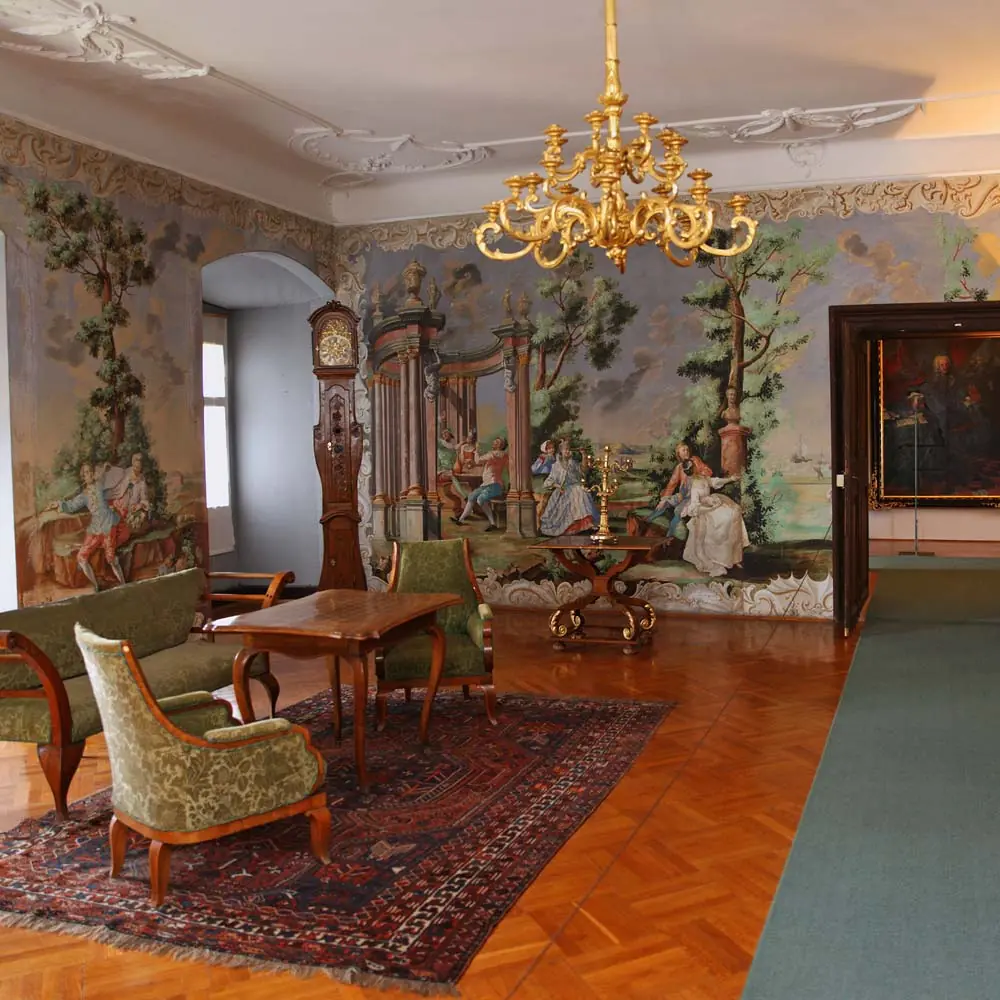
The medallions in the corners of the ceiling stucco are allegorical representations of the four seasons: the fire symbolises winter, the flowers spring, the ears of wheat summer and the vine with grapes autumn.The walls of the room are decorated with textile coverings featuring gallant scenes from noble life, allegorically depicting the five senses: two … Read more

The Countess’ dressing room

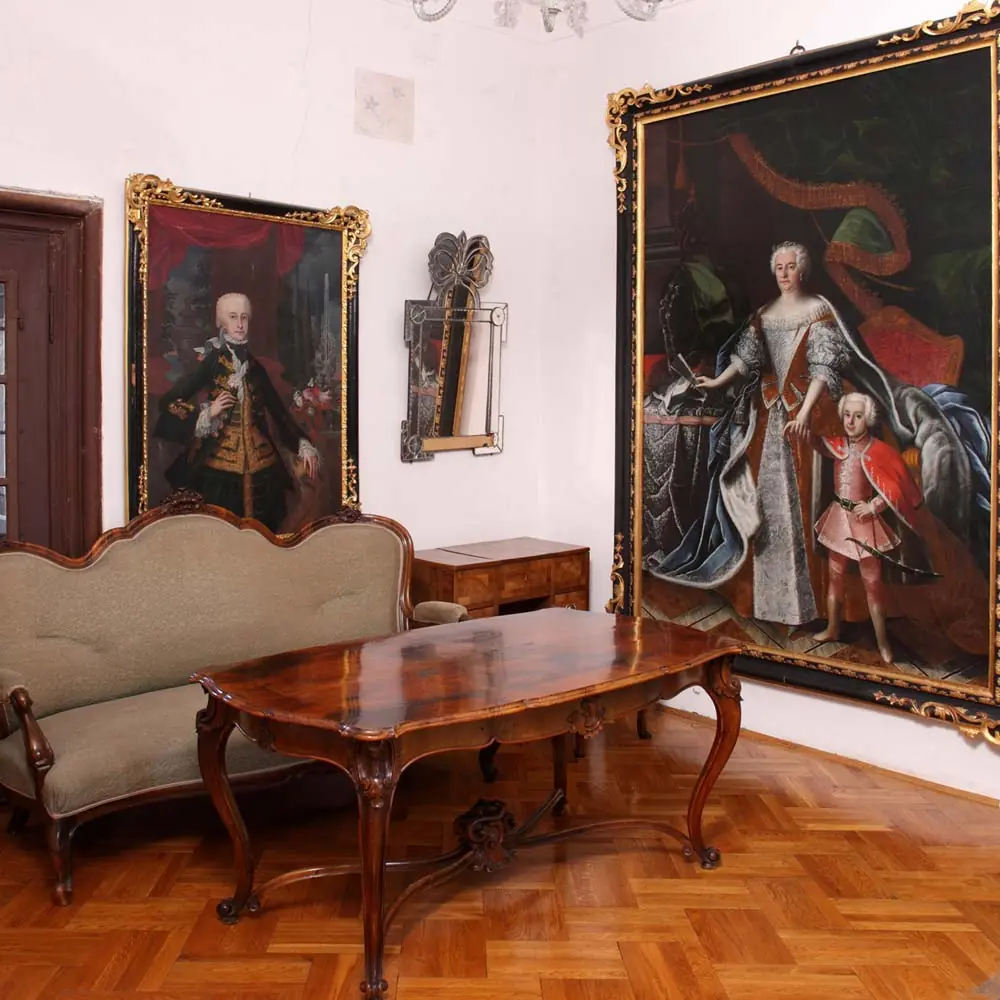
Smaller rooms in the central part of the castle were once used for private family life.The portraits of the Counts of Attems, works of painter Joseph Digl, used to adorn the festival hall of Dornava Mansion. The large representational portrait from 1736 depicts Thaddeus Cajetan Count Attems.The portrait of his wife Maria Anna, born Countess … Read more